




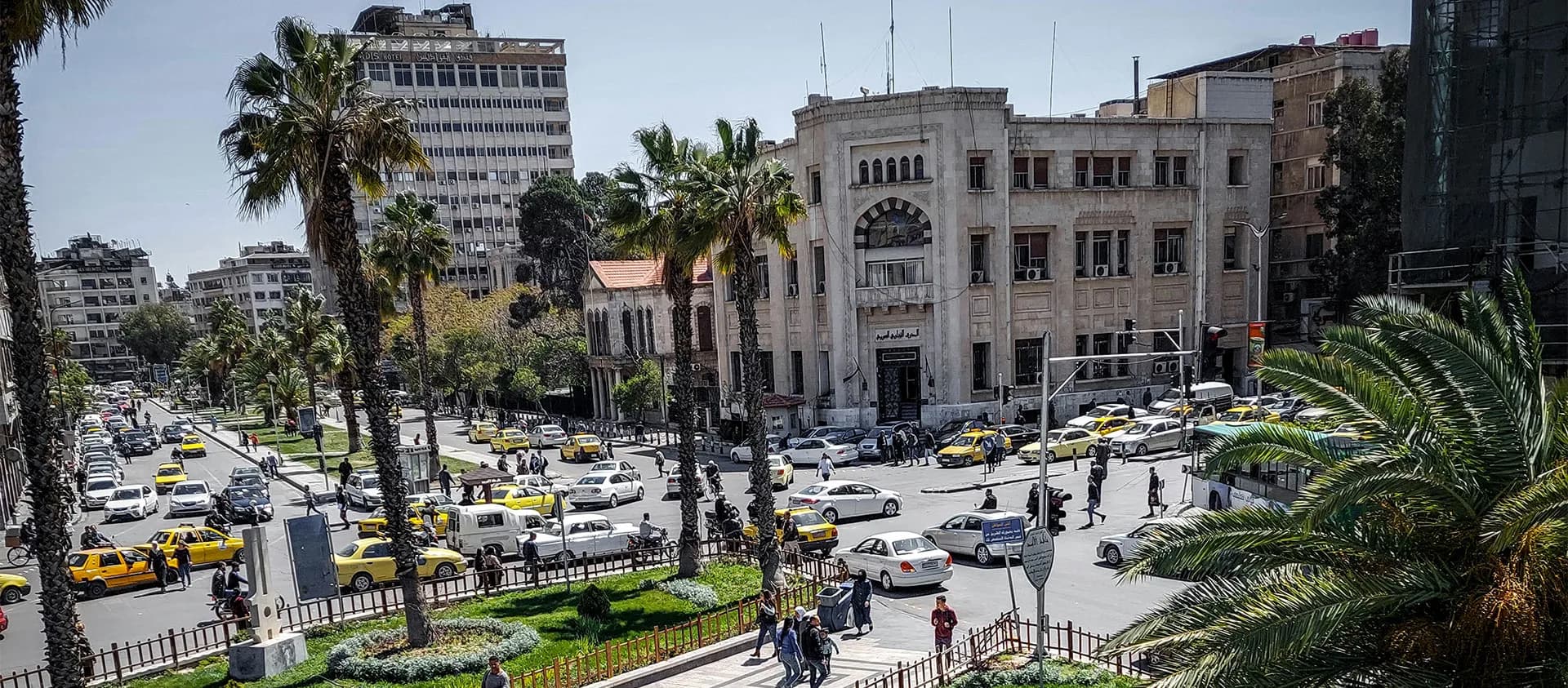
Syria is reemerging as a destination of interest for certain business aviation operators. While access remains complex and tightly regulated, a growing number of inquiries about overflight permissions, landing rights, and logistical support in the region suggest a cautious resurgence in interest. For operators considering flights to or over Syria, understanding the current regulatory, security, and operational landscape is critical.
Here's what operators need to know about the practicalities of conducting business aviation operations to Syria.
Why use Syria?
The reopening of Syrian airspace presents a unique opportunity for operators, flight dispatchers, flight planners, and corporate and private jet users to enhance connectivity across the Middle East and beyond. With strategic positioning, improving infrastructure, and evolving international cooperation, Syria is poised to become a vital player in global aviation networks.
Strategic Position
Syria has many distinct strategic advantages for business aviation operations, linking the continents of Europe, Asia, and Africa. Its airspace has traditionally played a key role in the regional and international air navigation. Using Syria enables operators to optimize routes, reduce travel time, and lower fuel consumption.
Shorter Routing and Flight Time
Syria provides a direct path for many transcontinental flights. Bypassing Syria often forces aircraft to take longer routes over Iraq, Iran, Turkey, or Egypt. These detours can add 15 to 45 minutes of flight time per sector, which translates to thousands of dollars in additional operating costs per flight.
Fuel Efficiency
Shorter routing through Syrian airspace results in measurable fuel savings. For wide-body aircraft operating long-haul routes, fuel savings can reach 300–800 kg per flight, depending on the alternative routing.
Operational Information
Treat Syria as a highrisk but reopening market: formal processes for permits, immigration and customs are in place. U.S. sanctions were permanently lifted in December 2025. However, several targeted restrictions, export controls, and compliance requirements remain in place and must still be assessed on a case-by-case basis.
Expect the Directorate General/General Authority of Civil Aviation and border agencies to apply rules conservatively; assume full compliance documentation will be requested for both aircraft and passengers.
Flight permits
All non-Syrian aircraft, including private and corporate, require both overflight and landing permits; there are no exemptions for GA or technical stops.
Overflight Permits
Requirements:
- Full aircraft details and complete route information.
- aircraft documents.
- Valid insurance certificate covering Syria.
Lead Time: 24 hours (or less in urgent situations).
Landing Permits
Requirements:
- Complete aircraft documents.
- Valid insurance certificate covering Syria.
- Full passenger list with details.
- Full crew details and GD.
Lead Time: 4–5 working days.
Note: In some cases, UAS can obtain the landing permit in less than 4 days.
Damascus International Airport
- IATA: DAM
- ICAO: OSDI
- Operating Hours: 24/7
Services Offered:
- Full ground handling support
- Refuelling services
- Supervisory assistance
Immigration
Passengers use the same terminal as commercial arrivals for immigration; however, a dedicated immigration desk or fast-track service can be arranged to streamline the process. Additionally, passengers may opt to use the VIP lounge at an extra cost. In this case, the local agent can collect the passports and complete immigration clearance while passengers wait comfortably in the lounge.
For most nonexempt nationalities, operators should plan on:
- Advance “visa approval” (security clearance) arranged via a local sponsor, tour operator or handling agent, typically several weeks out for firsttime visitors.
- Physical visa issuance on arrival or in advance, depending on current policy for that passport.
- Crew members can enter Syria under a General Declaration (GD) for up to 72 days
- Visa extensions are possible and subject to approval based on nationality and specific circumstances
Customs and baggage handling
Customs for private flights follows the commercial model: inbound passengers are screened, baggage is Xrayed/inspected, and declarations are required for highervalue goods, professional equipment and larger currency holdings.
Expect:
- Conservative treatment of highvalue electronics, camera and communications equipment; where possible, manifest such items and carry supporting documentation (ownership letters, carnet, etc.).
- Currency declaration requirements for significant foreignexchange holdings; operators should brief passengers not to carry undeclared large sums of cash.
- Advise passengers that “VIP” handling does not equal reduced scrutiny; it typically only affects routing (e.g. GAT vs main terminal) and comfort, not regulatory controls.
Sanctions, insurance and compliance
Syria remains subject to complex international control regimes; in addition to airtransport regulations, operators must check exportcontrol and sanctions exposure for the aircraft, equipment and passengers, especially if any items fall under national exportcontrol lists or EARcontrolled categories.
Prior to committing a private flight, aviation professionals should ensure:
- The operator’s compliance team has cleared the trip for sanctions and exportcontrol risk (including any USorigin parts, software, or onboard systems that may be restricted for Syria).
- Hull and warrisk insurers explicitly accept both overflight and landing, with any additional premiums or clauses agreed in writing.
Our advice
Always route planning and permit work through a Syrianexperienced flightsupport or local handler; they maintain current contacts with the civil aviation authority, airport security and immigration, and can advise on realworld processing times and practices.
For each mission, professionals should:
- Lock the passenger list early and avoid late manifest changes.
- Obtain written confirmation of permit numbers, visa approvals and handling arrangements before aircraft positioning.
- Review current airport status (runway/serviceability, fuel availability, ground support, opening hours) and local security advisories for the city, not just the airport.
Whether you're planning a scheduled operation, a charter, or a private flight, UAS is equipped to handle every detail with precision and efficiency.
For support with your flight operations to Syria, contact UAS.
Stay ahead with exclusive updates
similar Blogs
No similar blogs found.