







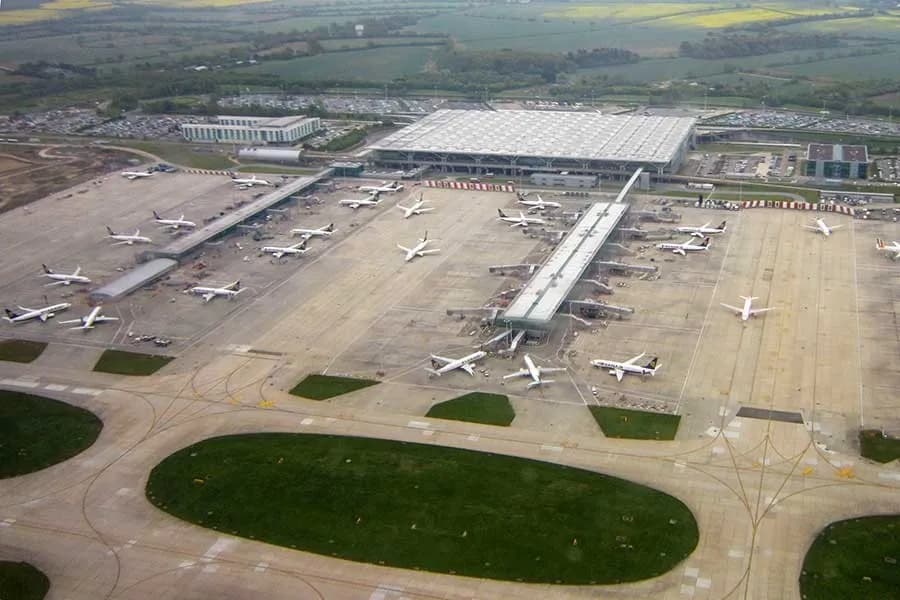
Noise curfew and slot restrictions were introduced at London Stansted Airport (STN/EGSS) during the S18 season to manage night-time aircraft operations and reduce the airport’s overall noise footprint. These measures apply to all aircraft operating at Stansted during the defined night period and directly affect slot availability, aircraft eligibility, and operational planning for arrivals, departures, and ground activities.
The S18 night period runs from 01:00 local time (0001 UTC) on March 25 to 01:59 local time (0059 UTC) on October 28, 2018. During this period, specific operating hours, curfew windows, and noise-based slot restrictions apply. These restrictions form an important part of operational planning for operators intending to access EGSS during night-time hours.
Overview of Night-Time Restrictions at Stansted (S18)
The primary purpose of the Stansted airport curfew and associated night flying restrictions is noise control. The curfew has been implemented to curb the airport’s noise footprint and address environmental and community noise concerns associated with aircraft movements during night hours.
For the S18 season, the restrictions apply uniformly, and aircraft types that were previously exempted from night operations noise restrictions are no longer excluded. This represents a significant operational change compared to previous years and requires careful consideration by operators planning flights during the night quota period.
The S18 restrictions apply only within the defined seasonal window and are specific to night-time operations. Outside the night curfew hours, standard operating procedures and slot availability apply.
Operating Hours and Curfew Periods
An easy-to-understand definition of the EGSS night period is based on local operating hours, with the times below expressed in local time using a UTC+1 offset during the S18 season.
Unrestricted Operating Hours
Regular operating hours at London Stansted run from 07:00 to 23:00. During this period, slot availability is typically unrestricted, and aircraft operations are not subject to night curfew limitations. Arrivals and departures can be scheduled without the additional noise-based constraints that apply overnight.
Night Curfew Period
The main night curfew is in effect from 23:00 to 07:00. During this period, slot availability is limited for all aircraft. Operators must account for the night flying restrictions when planning arrivals or departures that fall within these hours, as approval is not guaranteed and depends on noise quota considerations.
Shoulder Periods
Within the night curfew, shoulder periods apply from 23:00 to 23:30 and from 06:00 to 07:00. Slot availability during these shoulder periods is also limited for all aircraft. Slots for aircraft rated QC1 and above are unlikely to be approved during these times, making aircraft noise classification a critical factor in operational planning.
Slot Restrictions Based on QC Noise Rating
Slot eligibility during the night quota period at Stansted is closely linked to an aircraft’s Quota Count (QC) noise rating. The QC rating directly impacts whether an aircraft may be approved to operate during night hours and, if approved, whether limitations apply.
Aircraft rated up to QC1 may still operate depending on the movement limitations in place at the time. However, aircraft rated above QC1 are unlikely to receive slot approval during the night period. As a result, understanding the QC values assigned to specific aircraft types is essential when assessing the feasibility of night operations.
Examples of aircraft types and their associated QC values illustrate how noise ratings influence slot availability during the night quota period.
The EC155 helicopter carries a QC 0.5 rating for arrival and a QC 0.5 rating for departure. Operations during the night quota period are subject to limited slot availability.
The Bombardier Global Express has a QC 0 rating for arrival and a QC 0.25 rating for departure, with limited slot availability during the night quota period.
The Falcon 7X is rated QC 0 for arrival and QC 0.25 for departure, also operating under limited slot availability during night hours.
The Gulfstream 650 holds a QC 0 rating for both arrival and departure and remains subject to limited slot availability during the night quota period.
The Gulfstream 5 and Gulfstream 550 have a QC 0 rating for arrival and a QC 0.25 rating for departure, with limited slot availability during night operations.
Aircraft in the Airbus A318, A319, A320, and A321 series are rated QC 0.5 for arrival and QC 1 for departure, making them subject to limited slot availability during the night quota period.
BBJ 1, BBJ 2, and BBJ 3 aircraft carry QC ratings ranging from QC 0.5 to QC 1 for arrival and QC 0.5 to QC 2 for departure. These aircraft face limited slot availability during the night quota period and are not permitted to depart during the night period.
The Boeing 757 has arrival QC ratings ranging from QC 0.25 to QC 1 and departure ratings from QC 0.5 to QC 2. Operations are subject to limited slot availability, and departures are not permitted during the night quota period.
The Boeing 767 carries arrival QC ratings ranging from QC 0.5 to QC 1 and departure ratings from QC 0.5 to QC 2. Like the B757, it faces limited slot availability and cannot depart during the night quota period.
The Boeing 787 has arrival and departure QC ratings ranging from QC 0.25 to QC 1 and operates under limited slot availability during the night quota period.
Aircraft Movement Limitations Overnight
In addition to arrival and departure restrictions, the S18 noise curfew introduces movement limitations that extend beyond airborne operations. The Civil Aviation Authority has imposed restrictions that affect routine ground activities during the night curfew.
Activities such as Auxiliary Power Unit usage, engine start-up, and engine run-ups now require prior approval if they are scheduled to take place during night curfew hours. These requirements apply as part of the broader movement restriction framework and are intended to further control noise levels during overnight periods.
As a result, maintenance planning and aircraft positioning during night hours must account for these additional approval requirements. Operators must ensure that any required ground activity during the curfew is coordinated in advance to avoid non-compliance.
Why These Restrictions Matter
The night flying restrictions and slot limitations at London Stansted are designed to address environmental and community noise concerns associated with aircraft operations during sensitive overnight hours. By limiting aircraft movements and managing noise exposure, the airport aims to balance operational needs with its responsibility to surrounding communities.
The regulatory role of the UK Civil Aviation Authority underpins these measures, ensuring that noise management objectives are enforced consistently throughout the S18 period. The combination of curfews, shoulder periods, QC-based slot eligibility, and movement restrictions creates a structured framework for managing night-time operations at EGSS.
For operators, these restrictions matter because they directly affect scheduling flexibility, aircraft selection, and operational feasibility. Failure to account for the Stansted night flying restrictions can result in denied slots or operational delays.
Guidance for Operators Planning Flights to EGSS
Operators planning flights to London Stansted during the S18 period should prioritize early slot coordination and ensure full compliance with QC noise rating requirements. Understanding how an aircraft’s QC rating affects eligibility during the night period is essential when evaluating potential arrival or departure times.
Notification requirements apply for maintenance, positioning, or other ground activities that may need to occur during the curfew. Prior approval is required for such activities, and advance coordination is necessary to align with movement limitations imposed during night hours.
Careful planning around unrestricted hours, night curfews, and shoulder periods can help operators minimize disruption and maintain compliance with Stansted airport curfew requirements.
For support with your flight operations to Stansted, contact UAS.
Stay ahead with exclusive updates
similar Blogs
No similar blogs found.