




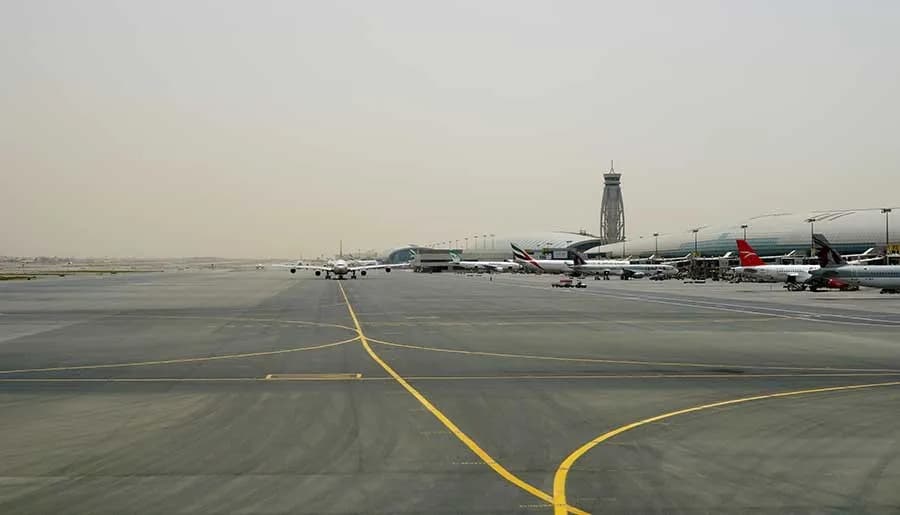
Dubai International Airport’s operational performance is closely linked to how efficiently aircraft utilize its runways. For operators using the dxb runway, understanding and actively minimizing runway occupancy is critical to maintaining flow, protecting slot integrity, and supporting the airport’s overall capacity.
Runway Occupancy Time, often referred to as dxb runway occupancy, is one of the most influential factors affecting airport efficiency. Even minor improvements in occupancy time can produce measurable gains in runway throughput. As highlighted by Dubai ATC and Dubai Airports, reducing runway occupancy by even one second can significantly increase runway capacity and overall traffic movement efficiency.
Pilots operating into the dubai airport runway environment are therefore encouraged to actively support initiatives designed to reduce Minimum Runway Occupancy Time.
Why Minimum Runway Occupancy Time (ROT) Matters at DXB
Runway Occupancy Time directly impacts how many aircraft movements can be safely accommodated during peak periods. Because DXB operates as a high-traffic hub, even marginal delays in vacating the runway can disrupt sequencing and affect downstream operations.
Occupancy time has such an impact on capacity and runway throughput that even small reductions in the time an aircraft spends on the runway will have a significant effect on airport performance. It is predicted that just one second of runway movement can result in the gain of several runway slots per day.
Dubai ATC is actively urging pilots operating to DXB to assist in alleviating pressure on the airport by focusing on their individual runway occupancy times. The collective impact of these individual efforts directly contributes to smoother traffic flow and improved operational efficiency.
Any delays in runway exits are disruptive to traffic flow. Minimizing ROT supports:
- Increased runway capacity
- Improved throughput
- Reduced delays during peak operating periods
- More efficient slot utilization
Arrival Protocols to Minimize ROT
Minimizing Arrival Runway Occupancy Times requires disciplined coordination between flight crews and Air Traffic Control.
Dubai ATC will advise aircraft on their final approach to the runway exit point. During peak times, ATC will nominate a preferred runway exit point to support optimized traffic sequencing.
Pilots are expected to:
- Vacate the runway as quickly as possible after landing
- Avoid stopping on the Rapid Exit Taxiway (RET) until the aircraft has passed the runway holding point, unless otherwise instructed
- Remain on Tower frequency until instructed to contact Ground frequency
- Expect initial taxi instructions from the Runway Controller before clearing the RET
There may be times when late landing clearances can be expected. Additionally, when Reduced Runway Separation Minima (RRSM) operations are applied, landing clearance may be issued when the runway is still occupied.
Operational awareness and readiness to comply with assigned exit points are critical components of reducing dxb runway occupancy during arrival phases.
Specific RET Locations by Runway
Rapid Exit Taxiways (RETs) are designed to allow aircraft to vacate the runway swiftly and efficiently. The RETs at DXB are positioned at 30° except M8, which is positioned at 25°. They are designed for aircraft to vacate at 93 km/h.
The following RETs are the preferred exits on individual runways, unless otherwise advised by ATC:
RWY 12L – Expect to vacate at:
- M7A
- N5A
- M9
- N6
RWY 12R – Expect to vacate at:
- K13
- M16
RWY 30R – Expect to vacate at:
- M3A
- N3A
- M6
- N5
RWY 30L – Expect to vacate at:
- K9
- M12B
- K8
- M11
ATC will advise aircraft on final approach regarding the expected runway exit point. During peak operating periods, strict adherence to assigned RETs supports smoother sequencing and helps prevent unnecessary runway occupation.
By using the designated RET efficiently and maintaining situational awareness, flight crews can directly contribute to minimizing runway occupancy on the dubai airport runway system.
Departure Guidelines & Efficient Spacing
Departure operations also play a significant role in overall ROT reduction.
The minimization of departure runway occupancy times can be supported through disciplined queue management and readiness procedures.
When queueing to depart, aircraft should:
- Maintain safe separation from the aircraft ahead
- Be ready to depart without delay once reaching the runway holding point
- Complete cockpit checks well in advance of line-up to minimize checks on the runway
Conditional line-up clearance procedures require careful attention. During times of heavy traffic pressure, line-up instructions may be conditional. In such cases:
- Listen closely to the specific conditional instruction
- Plan taxi movement onto the runway so stopping will not be necessary
- Taxi into position without delay once clearance is received
When take-off clearance is issued, ATC expects movement within 8–10 seconds of the clearance. Commencing the take-off roll without delay is critical to minimizing departure-related runway occupancy.
Standard ICAO wake turbulence separation is applied during these operations.
When Reduced Runway Separation Minima (RRSM) operations are in effect, landing clearance may be issued while the runway is still occupied. Under RRSM:
- Visibility must be 5 km or greater
- Tailwind must be 5 knots or less
Efficient ROT reduction is critical to safely utilizing RRSM procedures.
Rolling takeoffs are encouraged to lower runway hold time, contributing further to departure efficiency on the dxb runway.
Operational Impact & Benefits
Shorter ROT enables:
- More takeoffs and landings within peak periods
- Improved runway throughput
- Better slot optimization
- Enhanced support for high-traffic hub operations
Because DXB functions as a major international hub, coordinated efforts between ATC and flight crews are essential. By minimizing both arrival and departure occupancy times, operators support the overall efficiency of the airport system.
Runway Occupancy Time remains one of the greatest factors affecting airport flow and performance. Proactive compliance with assigned RETs, disciplined departure readiness, and immediate response to clearances directly support the broader objective of reducing congestion and maximizing capacity at Dubai International Airport.
For ongoing updates and operational information, refer to:
Conclusion
Minimum Runway Occupancy Time at Dubai International Airport is a critical operational consideration for all operators using the dubai airport runway system. Even incremental reductions in dxb runway occupancy contribute meaningfully to runway capacity, traffic flow, and overall airport efficiency.
By vacating the runway promptly after landing, complying with assigned RETs, maintaining readiness for departure, and responding without delay to ATC clearances, pilots directly support DXB’s high-capacity operational model.
Contact UAS for Operational Support
For operators requiring coordinated operational planning at Dubai International Airport, including alignment with ATC procedures and runway efficiency requirements, UAS provides comprehensive aviation trip support services.
If you require assistance with business aviation trip support or urgent trip support services at DXB, contact our team to ensure your operations are supported in line with current airport procedures and operational guidance.
Stay ahead with exclusive updates
similar Blogs
No similar blogs found.