







This is a developing operational situation. Airport, airspace, permit, and handling conditions remain subject to short-notice changes and authority confirmation.
Two major earthquakes measuring 7.2 and 7.5 struck northern Venezuela on June 24, 2026, less than one minute apart.
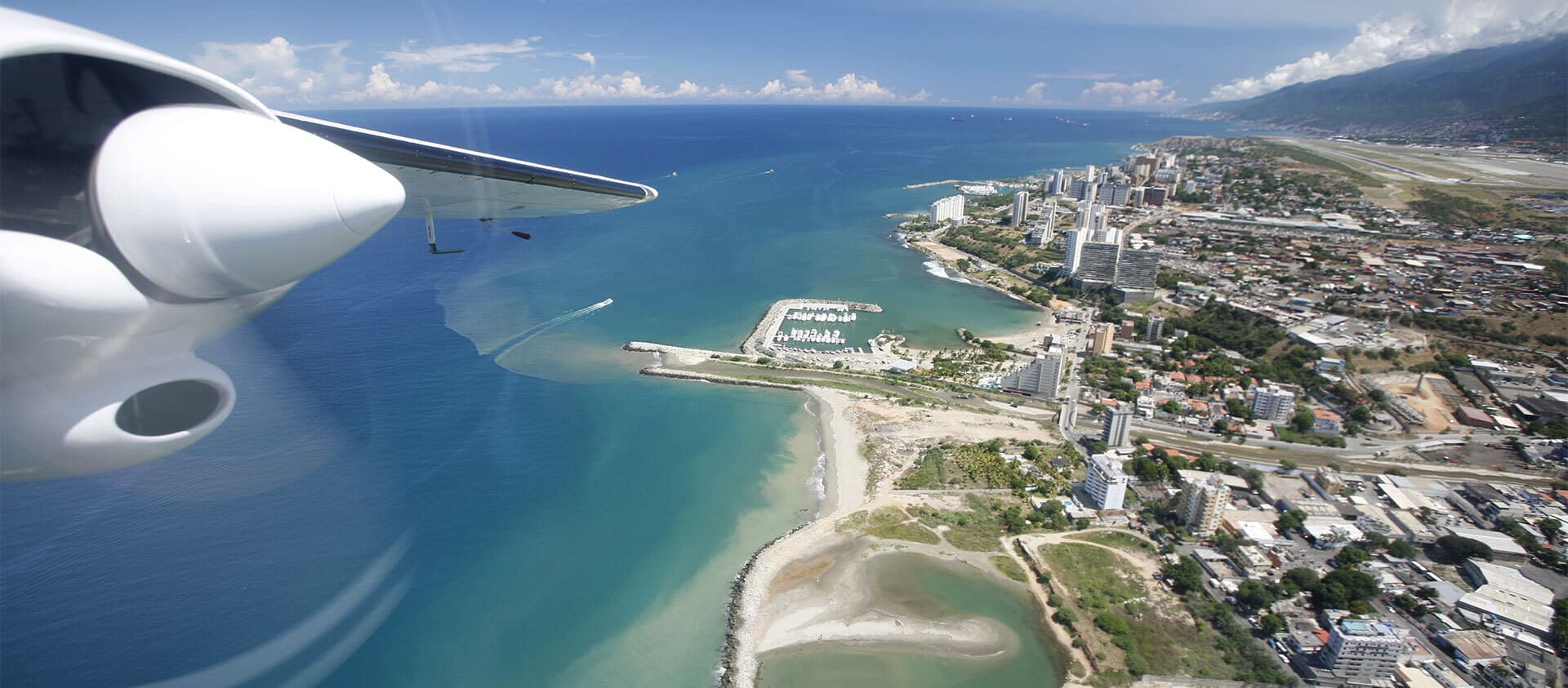
The earthquakes caused widespread infrastructure damage and led the Venezuelan authorities to declare a national state of emergency. Simón Bolívar International Airport in Maiquetía (SVMI/CCS), Venezuela’s primary international gateway, has been closed following damage to the airport infrastructure.
The closure of SVMI and the disruption of air traffic control services are significantly affecting Venezuela flight operations. Humanitarian missions may need to operate through alternative airports and military facilities, subject to advance authorization.
Current aviation status in Venezuela
Operators planning flights to, from, or through Venezuela should currently consider the following:
- Simón Bolívar International Airport (SVMI/CCS) remains closed while structural and operational assessments continue.
- Maiquetía ACC services within the SVZM Flight Information Region are unavailable, with the airspace currently designated ATC Zero.
- NOTAM and AIS services have been affected by the disruption.
- Contingency routings have been issued, and surrounding area control centres are supporting aircraft avoiding the affected airspace.
- The earlier tsunami threat has been cancelled, although aviation and ground infrastructure disruption continues.
- Airport and airspace instructions may change at short notice.
ATC Zero means that normal air traffic control services are unavailable within the affected area. Operators should not assume that standard routings, clearances, communication procedures, or flight information services will be available.
The latest contingency routing and coordination instructions must therefore be reviewed immediately before dispatch.
Humanitarian cargo operations at El Libertador Air Base (SVBL)
El Libertador Air Base (SVBL) is being considered for approved humanitarian and relief operations.
Local confirmation indicates that ground support equipment for aircraft loading and unloading can be made available. Ground power unit services have also been confirmed.
However, because SVBL is a military facility and regional communications remain constrained, detailed information such as complete equipment inventories, apron specifications, manoeuvring limitations, and precise operating procedures may not be available for external distribution.
Operators should take the following into account:
• Ground handling equipment
The air base has confirmed that the necessary loading, unloading, and ground support capabilities can be arranged for the aircraft involved in the humanitarian operation.
Any mission requiring specific loaders, lifting equipment, loading heights, weight capacities, or specialised cargo-handling tools should communicate these requirements well in advance.
Additional coordination time may be required to verify highly specific equipment requests.
• Towbar requirements
An aircraft towbar is not currently available at SVBL.
Operators are strongly advised to carry the aircraft’s own compatible towbar. Aircraft-specific towing requirements should be submitted during the initial handling request.
• Aircraft parking
The availability of nose-out parking cannot currently be guaranteed.
Precise information concerning apron geometry, parking positions, turning areas, and aircraft manoeuvring limitations remains limited. Operators should therefore plan for the possibility that towing or repositioning may be required.
• Fuel availability
Fuel has been confirmed as available for approved humanitarian aircraft operations.
Potential exemptions from certain airport or operating charges may also be available, subject to authorization by the relevant Venezuelan authorities. These exemptions should not be assumed until formally confirmed.
Humanitarian passenger flights through Arturo Michelena International Airport (SVVA)
Arturo Michelena International Airport in Valencia (SVVA/VLN) remains the designated civil alternative for private and passenger charter operations.
However, flight permit approvals are currently expected to be highly restricted.
Only passenger flights directly connected to humanitarian missions are expected to be accepted and evaluated. These may include flights transporting:
- Humanitarian relief personnel
- Medical teams
- Aid workers
- Search and rescue specialists
- Emergency response personnel
- Other approved humanitarian support teams
Permit requests for humanitarian passenger flights will be assessed directly by the competent authorities and are expected to receive priority.
At present, permits for non-humanitarian private or passenger charter flights are not expected to be approved, even though SVVA remains the applicable civil handling airport for these categories of operation.
Towbar and parking considerations at SVVA
Towbars are not available for every aircraft type at SVVA. Operators should therefore bring an aircraft-compatible towbar whenever possible.
As with SVBL, the availability of a nose-out parking position cannot be confirmed. Operators should submit aircraft dimensions, turning requirements, towing restrictions, and parking preferences as early as possible.
What humanitarian flight operators should provide
To support the feasibility review and authorization process, operators should be prepared to provide complete mission details at the earliest opportunity.
Providing this information early will help local teams identify requirements that need additional verification with the airport, military authorities, or other competent agencies.
Key planning recommendations
Operators preparing Venezuela earthquake relief flights should:
-
Confirm mission eligibility before departure
Humanitarian status and permit eligibility must be confirmed before the aircraft is dispatched. -
Carry an aircraft-compatible towbar
Towbar availability is limited at both SVBL and SVVA. -
Identify critical equipment requirements early
Do not rely solely on general ground-support confirmation when an operation requires aircraft-specific loaders, lifting equipment, or cargo-handling capabilities. -
Build flexibility into the flight plan
Alternative routings, additional fuel, possible holding, airspace avoidance, and short-notice operational changes should be considered. -
Allow additional coordination time
Communications and access to detailed operational information remain constrained. Highly specific requests may take longer to verify or may not be available for external distribution. -
Monitor airspace instructions continuously
SVZM airspace, neighbouring FIR coordination, contingency routes, and ATC availability may change with little notice.
UAS support for Venezuela humanitarian flight operations
UAS is closely monitoring the operational situation in Venezuela, including:
- SVMI airport closure and recovery status
- SVZM airspace and ATC availability
- Humanitarian flight permit requirements
- SVBL ground handling and fuel arrangements
- SVVA humanitarian passenger flight approvals
- Contingency routing through surrounding airspace
- Airport equipment and aircraft parking requirements
Operators planning humanitarian cargo or passenger flights should coordinate as early as possible and identify any mission-critical requirements that need special verification.
The UAS Global Operations team is available 24/7 to support flight feasibility assessments, permits, flight planning, ground handling, fuel, and operational coordination for humanitarian missions to Venezuela.
Stay ahead with exclusive updates
similar Blogs
No similar blogs found.